
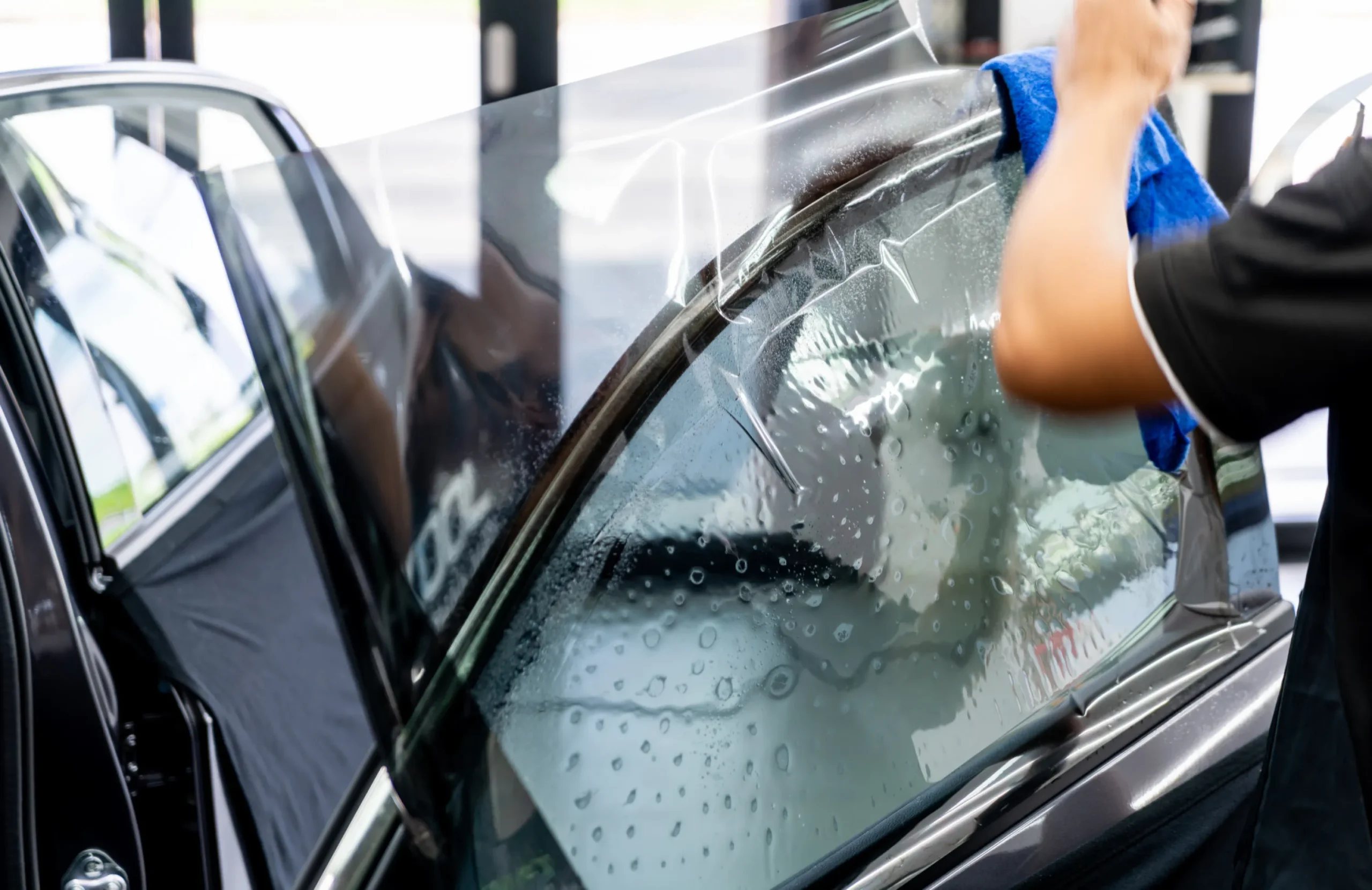
XPEL Window Tint Dubai: Beat the Heat, Stay Legal & Safe
We all know the feeling. You park your car outside for 20 minutes in July. When you open the door, a wave of heat hits you like a physical wall. The steering wheel is too hot to touch, and the leather seats could fry an egg.
Window tinting in Dubai isn’t a cosmetic upgrade; it’s a survival requirement.
But with strict RTA regulations and police crackdowns on “dark” tints, many drivers are confused.
- “Is 50% tint legal?”
- “Can I tint my windshield?”
- “Why is XPEL better than the AED 150 tint shop in Satwa?”
At Auto Glow, we install XPEL Window Films daily. In this guide, we’ll clear up the legal confusion and explain how you can reject 98% of the heat without breaking the law.
The Law: What is Actually Legal in 2025?
First, let’s look at the RTA and Dubai Police regulations.
For private vehicles, the law allows a maximum tint darkness of 50% VLT (Visible Light Transmission) for side and rear windows.
The “50% Rule” Explained
There is a common misconception that “50%” means the tint blocks 50% of the light.
- Actually: It refers to the darkness level allowed. In 2017, the law was updated from 30% to 50%, allowing for darker tints to cope with the UAE climate.
- Front Windshield: This must remain clear (0% tint) unless you have a medical permit or are using a specialized clear heat-rejection film (more on that below).
- Reflective Tint: Mirror-like or metallic reflective tints are strictly prohibited because they blind other drivers with glare.
The Fine:
If your tint is too dark or reflective, the fine is AED 1,500.
Not All Tints Are Created Equal: Dyed vs. Ceramic
This is the most important section for your comfort.
When you see a shop offering “Full Car Tint for AED 200 (approximately),” they are using Dyed Film.
- Dyed Film: It’s just a plastic sheet dyed black. It provides privacy, but it stops almost zero heat. The sun’s infrared rays pass right through it. It also fades to purple over time.
- Ceramic Film (XPEL): This contains millions of microscopic ceramic nanoparticles. These particles do not just block light; they block Infrared Heat (IR).
The Auto Glow Difference:
We use XPEL Prime XR and XR Plus. These are Nano-Ceramic films.
- Benefit: You can have a lighter tint (legal 50%) that blocks more heat than a pitch-black dyed tint.
- Heat Rejection: XPEL Prime XR Plus rejects up to 98% of Infrared Heat.
XPEL Prime Product Menu: Good, Better, Best
We offer three tiers of protection to suit your budget.
1. XPEL Prime CS (Color Stable)
- Technology: Nano-Carbon (No dye, no metal).
- Heat Rejection: Good.
- Best For: Drivers on a budget who want a black look that won’t turn purple, with decent heat protection.
2. XPEL Prime XR (Ceramic)
- Technology: Nano-Ceramic.
- Heat Rejection: 88% IR Rejection.
- Best For: The perfect balance of performance and price. It blocks significantly more heat than standard tints.
3. XPEL Prime XR Plus (The “Oven Stopper”)
- Technology: Multi-layer Nanoparticle Ceramic.
- Heat Rejection: 98% IR Rejection.
- Best For: Anyone who hates the heat. It is the highest performing film on the market. You can literally feel the difference on your skin when the sun hits the glass.
The “Clear” Windshield Solution
Can you tint your front windshield? Legally, you cannot use dark tint.
However, XPEL offers Prime XR Plus 70%.
- What is it? It is a virtually clear film.
- What does it do? It still blocks 94% of Infrared Heat and 99% of UV rays.
- Is it legal? Because it is optically clear, it does not obstruct vision. Many of our customers install this to protect their dashboard and hands from burning without attracting police attention.
Note: Always check with our technicians for the latest RTA specific interpretations.
Will Ceramic Tint Block My GPS?
Old-school “Metallic” tints used to interfere with GPS, radio, and Salik tags because they contained metal layers.
XPEL Ceramic films are 100% metal-free.
- Result: Zero interference with GPS, Bluetooth, mobile reception, or radio signals.
Conclusion: Don’t Cook in Your Car
Driving in Dubai is unavoidable. Sweating in your car shouldn’t be.
By investing in XPEL Prime Ceramic Tint, you aren’t just making your car look cool; you are making it physically cooler. You will use less AC, protect your leather from UV fading, and arrive at your meetings without a sweaty back.
Ready to upgrade?
Stop by Auto Glow. We have a heat lamp demo in our showroom. You can put your hand under a standard tint vs. XPEL XR Plus and feel the difference instantly.
Related Articles
- XPEL vs. 3M: Why We Chose XPEL for UAE Cars
- How Much Does PPF Cost in Dubai?
- PPF vs. Ceramic Coating: Which One Do You Actually Need?
- Protecting White Cars: Will PPF Turn Yellow?
- Preventing Rock Chips on Sheikh Zayed Road
FAQs
1. Is 50% window tint legal in Dubai?
Yes. RTA allows up to 50% Visible Light Transmission for private vehicles on side and rear windows.
2. Can I tint my windshield?
Legally, only clear heat-rejection films like XPEL Prime XR Plus are allowed for front windshields.
3. Does ceramic tint interfere with GPS or Salik tags?
No. XPEL Ceramic films are 100% metal-free, so GPS, radio, and mobile signals work perfectly.
4. How much heat does XPEL Prime XR Plus block?
Up to 98% infrared heat, protecting your car’s interior and reducing AC usage.
5. Can I use cheap dyed tints instead?
Dyed films block little heat and fade to purple over time. Ceramic films are far superior for Dubai’s climate.